













Commercial earthquake risk remains one of the biggest threats to buildings across the Western U.S. From California to Washington and Oregon, and as far east as Nevada and Utah, property owners are increasingly concerned about how a major earthquake could affect their buildings, tenants, operations, and long-term investments.
While earthquakes cannot be prevented, the damage they cause can often be reduced through proper planning and seismic retrofitting. For many building owners, the question is no longer whether earthquake risk exists — it is whether their property is prepared for it.
Why the West Coast Faces Significant Earthquake Risk
The Western U.S. lies along the Pacific Ring of Fire, one of the world’s most active seismic regions. California, Oregon, Washington, and neighboring states like Nevada and Utah experience constant geological activity driven by shifting tectonic plates beneath the Earth’s surface.
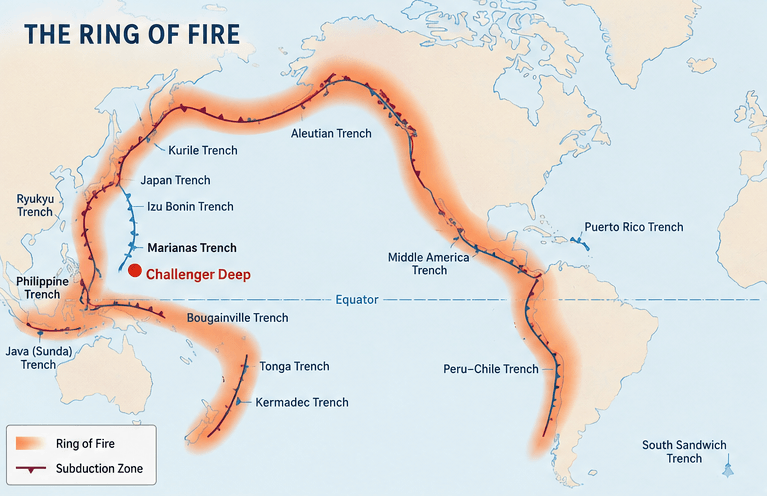
Thousands of earthquakes occur throughout the region every year. Most are small and go unnoticed, but scientists continue to warn that larger and potentially damaging earthquakes remain inevitable.
California alone contains more than 500 active faults and holds most of the nation’s earthquake risk. In the Pacific Northwest, concern continues to grow around the Cascadia Subduction Zone, which is capable of producing a massive earthquake and tsunami.
As a result, many commercial property owners are evaluating their buildings’ vulnerability to major earthquakes.
Major Fault Systems Across the Western U.S.
Several major fault systems contribute to earthquake risk throughout California, the Pacific Northwest, and other parts of the Western U.S. While some faults are more active than others, all have the potential to impact commercial buildings, infrastructure, business operations, and surrounding communities.
San Andreas Fault
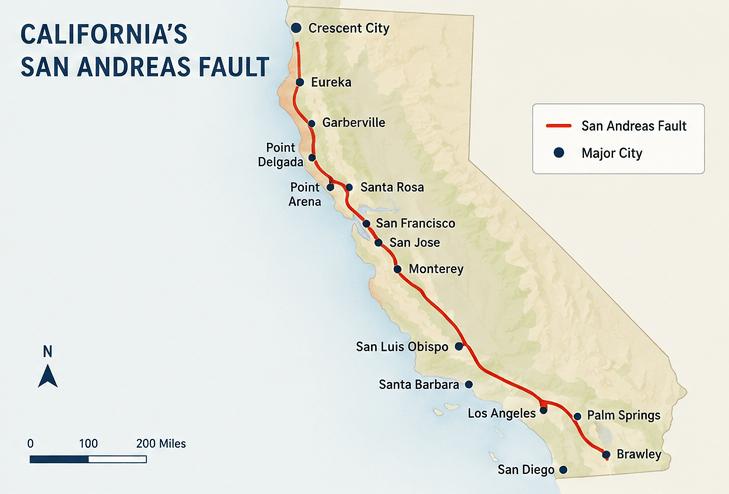
The San Andreas Fault is one of the most well-known fault systems in the world. It stretches roughly 800 miles through California and has been responsible for several major earthquakes, including the 1906 San Francisco earthquake and the 1989 Loma Prieta earthquake.
Because the fault runs through heavily populated parts of California, a major event along this system could affect millions of people, businesses, roads, utilities, and commercial properties.
Hayward Fault
The Hayward Fault runs through the East Bay region of Northern California near densely populated cities and major transportation corridors. Many scientists believe this fault is one of the Bay Area’s most concerning seismic threats because of its location and long period without a major rupture.
A significant earthquake along the Hayward Fault could cause widespread damage to buildings, infrastructure, and utilities throughout the region.
Cascadia Subduction Zone
The Cascadia Subduction Zone stretches from Northern California through Oregon and Washington into British Columbia. Unlike many California faults, Cascadia is capable of producing an extremely large “megathrust” earthquake along with a tsunami.
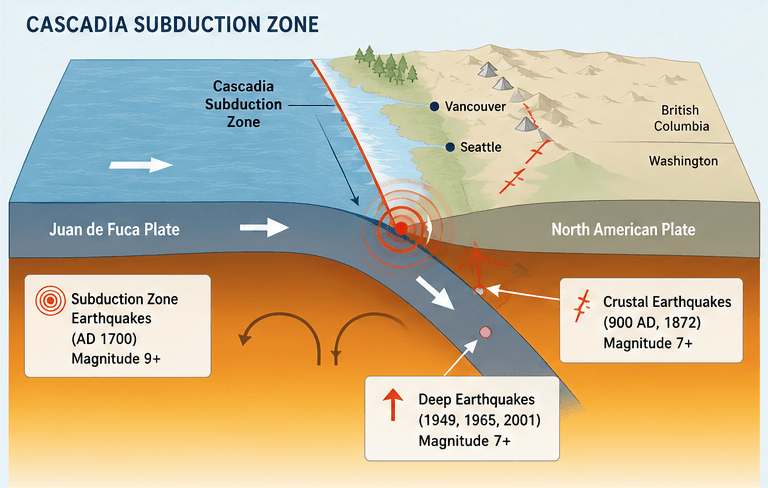
Scientists continue to study the possibility of a future Cascadia earthquake because of the widespread impact it could have on coastal communities, ports, utilities, transportation systems, and commercial buildings throughout the Pacific Northwest.
Seattle Fault Zone
The Seattle Fault Zone runs beneath the Seattle metropolitan area and poses a serious earthquake risk to the region. A major rupture could create intense shaking directly beneath a densely developed urban area.
Because Seattle contains critical infrastructure, industrial facilities, bridges, ports, and commercial buildings, the potential impact of a major earthquake in this area remains a significant concern.
San Jacinto Fault
The San Jacinto Fault is one of Southern California’s most active fault systems. It runs parallel to parts of the San Andreas Fault and is prone to frequent seismic activity.
Scientists closely monitor this fault because movement along the San Jacinto system may influence stress along nearby faults throughout Southern California.
Garlock Fault
The Garlock Fault stretches across Southern California near the Mojave Desert. Although it receives less public attention than the San Andreas Fault, experts believe it is capable of generating large earthquakes.
Researchers continue to study how activity along the Garlock Fault could interact with nearby fault systems across Southern California.
Newport-Inglewood Fault
The Newport-Inglewood Fault runs through heavily developed areas of Los Angeles and Orange County near major commercial, industrial, and port facilities.
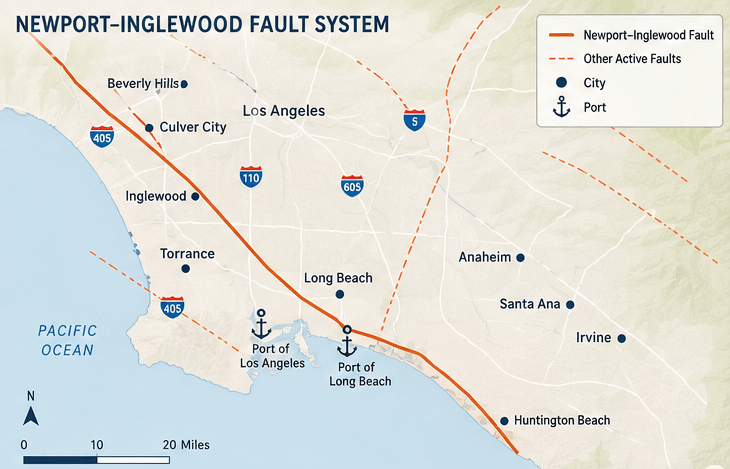
Because this fault passes through highly populated urban areas, a major earthquake could affect transportation systems, utilities, industrial operations, and commercial real estate throughout the region.
Palos Verdes Fault Zone
Recent studies have increased concern about the Palos Verdes Fault Zone off the Southern California coast. Scientists previously believed this area consisted of several smaller fault segments. However, newer research suggests the system may be more connected than originally thought.
A large earthquake along this fault could potentially impact coastal communities, ports, infrastructure, and commercial properties throughout Los Angeles and Orange County.
Wasatch Fault
The Wasatch Fault in Utah presents a major earthquake risk to the Salt Lake City region and surrounding communities. Much of the area’s population and development sits close to the fault zone.
Experts continue to warn that a significant earthquake along the Wasatch Fault could heavily impact older buildings, utilities, transportation systems, and commercial properties throughout the region.
Historic Earthquakes That Changed Building Standards
Several major earthquakes have reshaped building codes and seismic safety standards across the Western U.S. These events also changed how engineers, insurers, lenders, and property owners think about building performance during earthquakes.
1906 San Francisco Earthquake
The 1906 San Francisco earthquake caused widespread destruction, fires, and thousands of deaths. It remains one of the most devastating earthquakes in U.S. history and helped change how buildings were designed in seismic regions.
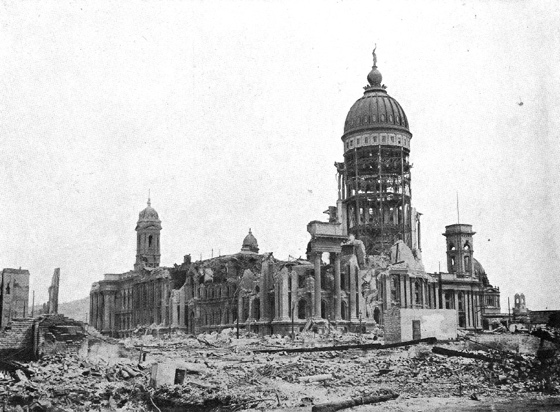
San Francisco City Hall in ruins.
1989 Loma Prieta Earthquake
The Loma Prieta earthquake damaged highways, bridges, and buildings throughout the Bay Area. It exposed weaknesses in older structures and highlighted the importance of seismic upgrades for critical infrastructure.
1994 Northridge Earthquake
The Northridge earthquake caused severe structural damage throughout the Los Angeles region and revealed vulnerabilities in many commercial and multifamily buildings.
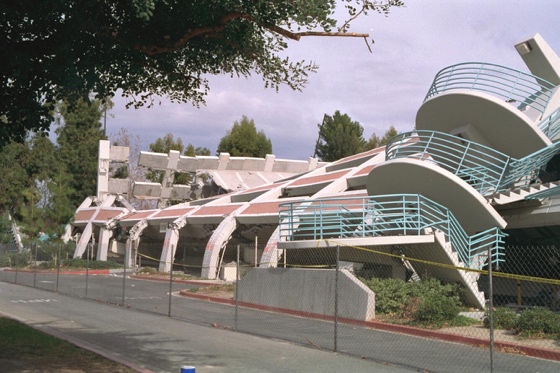
Parking garage structural failure
Today, many lenders, insurers, and engineers consider buildings constructed before 1997 potential retrofit candidates that should be evaluated for seismic risk.
2001 Nisqually Earthquake
The Nisqually earthquake in Washington caused widespread damage throughout the Seattle-Tacoma region and reinforced concerns about seismic preparedness in the Pacific Northwest.
What Makes Commercial Buildings Vulnerable During Earthquakes?
Not all buildings respond to earthquakes the same way. Several factors can increase the likelihood of structural damage during strong ground shaking.
Common Commercial Building Risk Factors
- Older buildings constructed before modern seismic standards
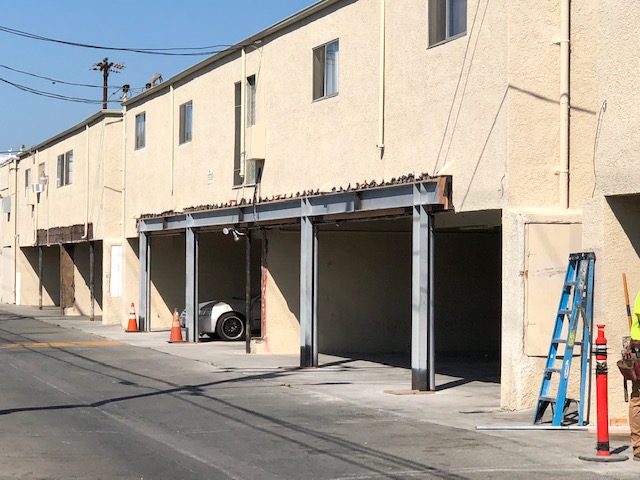
- Soft-story or tuck-under parking configurations
- Non-ductile concrete construction
- Large wall openings or weak first floors
- Inadequate lateral support systems
- Weak roof-to-wall connections
- Large openings in roof or floor systems
- Irregular building layouts
- Previous structural damage or deterioration
- Buildings located near active faults or liquefaction zones
Many commercial and industrial buildings currently in operation were designed decades ago under older standards focused primarily on life safety. That means a building may avoid collapse during an earthquake but still suffer serious structural damage, operational disruption, or costly repairs afterward.
For business owners, property managers, and investors, those disruptions can have long-term financial consequences.
Why Seismic Retrofitting Matters
Seismic retrofitting helps strengthen vulnerable buildings so they can better withstand earthquake forces. Depending on the structure, retrofits may reinforce structural connections, improve load paths, strengthen lateral systems, or address weaknesses identified during engineering evaluations.
For commercial property owners, seismic retrofitting may help:
- Improve insurability and lender confidence
- Reduce the risk of major structural damage
- Improve life safety for occupants and tenants
- Minimize business interruption
- Reduce long-term repair costs
- Support faster recovery after an earthquake
- Protect long-term property value
- Increase buyer confidence and marketability for future property sales
In some cases, retrofitting may also help property owners address future ordinance requirements, insurance concerns, lender requirements, or tenant expectations before they become urgent issues.
The Importance of Early Planning
One of the biggest misconceptions about seismic retrofitting is that it immediately leads to construction. In reality, many building owners begin with evaluations, budgeting, and long-term planning.
Understanding your building’s vulnerabilities early allows you to make informed decisions about:
- Capital improvement planning
- Tenant coordination
- Phased retrofit strategies
- Acquisition due diligence
- Insurance and lender requirements
- Future building upgrades
For occupied commercial and industrial buildings, early planning can also help reduce operational disruption during future retrofit work.
Preparing Your Property for Future Earthquakes
Earthquake risk across the Western U.S. is not going away. Scientists continue to study fault systems, evaluate new seismic data, and improve understanding of how future earthquakes could affect buildings and infrastructure throughout the region.
For commercial and industrial property owners, the most effective approach is proactive preparation rather than reactive recovery. Evaluating your building, identifying potential vulnerabilities, and exploring seismic retrofit options can help reduce risk before the next major earthquake.
Seismic retrofitting can also provide long-term financial advantages. Many buyers, lenders, and insurers prefer retrofitted buildings because they may present lower risk, fewer future liabilities, and stronger long-term stability. In some markets, retrofitted buildings may also attract greater buyer interest and improved property value.
With more than four decades of experience, Saunders Seismic performs seismic retrofits and structural repairs for commercial and industrial buildings across California, Oregon, Washington, Nevada, and Utah. Saunders specializes in working in occupied spaces while helping clients minimize tenant disruption and operational downtime during construction.
If you are unsure where to start, Saunders Seismic can help you better understand your building’s seismic risks, retrofit options, and potential budgeting considerations. Contact us to schedule a free, no-pressure consultation today.