
Structural Concrete Repair for Commercial Buildings
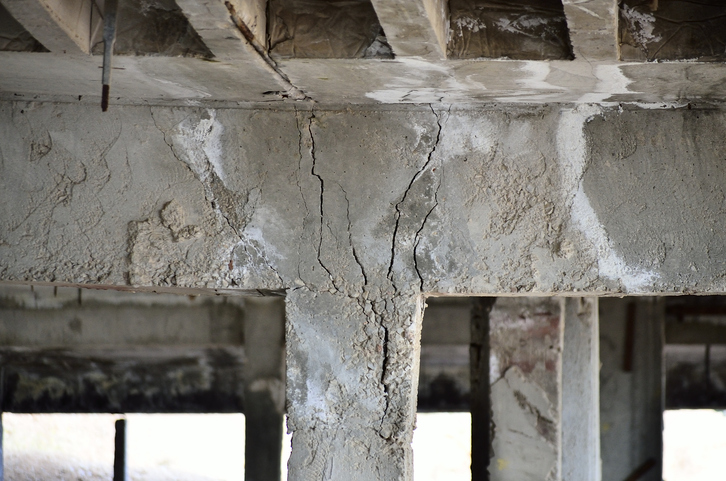
Structural concrete repair is often delayed because early signs of damage seem minor: A crack appears manageable, or a small area of spalling feels cosmetic. However, in commercial buildings, delaying repairs can quickly escalate into critical failures when deterioration affects reinforcement, connections, and load paths.
Concrete does not fail suddenly. It deteriorates gradually through moisture intrusion, corrosion, settlement, and seismic stress. Over time, those conditions can reduce structural capacity and earthquake performance.
Structural repair protects the structural integrity of your building before deterioration compromises safety, disrupts operations, or reduces asset value.
If you own or manage a commercial or industrial property in the Western U.S., understanding when commercial concrete repair becomes structural is essential. It’s the foundation for making informed decisions about building maintenance and repair.
What Is Structural Concrete Repair?
Structural concrete repair addresses damage that compromises a building’s ability to transfer loads safely. In commercial buildings, that includes gravity loads, wind loads, and seismic forces.
In commercial buildings, water intrusion is the most common cause of structural concrete deterioration.
When water penetrates concrete, it reaches the embedded reinforcing steel. As steel corrodes, it expands. That expansion creates internal pressure within the concrete, which leads to cracking and eventually spalling. Once reinforcement is compromised, the structural capacity of the element can decline.
Commercial concrete repair becomes structural when:
- Reinforcing steel corrodes and expands
- Cracks extend through structural sections
- Concrete spalls and exposes embedded steel
- Roof-to-wall anchorage separates
- Shear cracking appears in tilt-up panels
Thermal cracking caused by normal temperature changes is typically minor and cosmetic. Structural concrete repair is required when cracking affects reinforcement, load paths, or seismic performance.
The next step is determining whether the damage you see affects structural performance or is limited to surface conditions.
Cosmetic vs. Structural Concrete Damage
Many commercial property owners assume all cracks are structural. Others assume none are. The difference matters.
The following comparison clarifies when commercial concrete repair requires engineering evaluation.
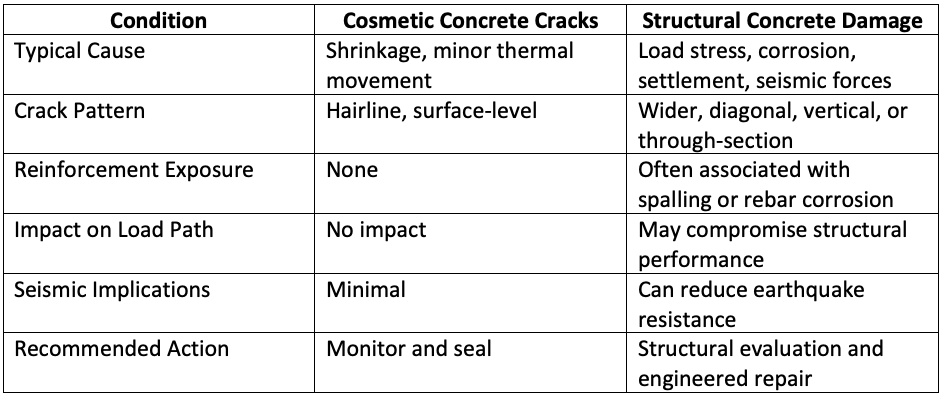
If reinforcement is compromised or if cracking affects load transfer, structural concrete repair is required.
If you’re uncertain whether the damage is cosmetic or structural, a structural assessment is the next step. Often, early indicators appear long before significant issues develop.
Recognizing early warning signs helps prevent minor deterioration from escalating into major and more costly structural repairs.
Signs Structural Concrete Repair May Be Needed
Understanding the difference between cosmetic and structural damage is important—but action matters more. Delays worsen outcomes and increase long-term costs.
Structural concrete crack repair may be necessary if you observe:
- Spalling that exposes reinforcing steel
- Diagonal cracking near openings, particularly if cracks widen or extend over time/strong>
- Vertical cracks running through wall panels
- Foundation cracks that widen over time
- Separation at roof-to-wall connections
- Water intrusion accelerating deterioration
Not all visible cracks require structural intervention. But commercial concrete repair should be evaluated when cracking suggests load-related stress or corrosion.
Early evaluation reduces the likelihood of more extensive repairs later.
Why Commercial Buildings in the Western U.S. Face Higher Risk
Commercial concrete repair is more common in the Western U.S. due to the combination of aging inventory and seismic exposure.
Many tilt-up and cast-in-place commercial buildings constructed before 1978 predate modern seismic detailing standards. These buildings often lack:
- Robust roof-to-wall anchorage
- Proper collector systems
- Modern diaphragm reinforcement
- Improved connection detailing
Over decades, moisture intrusion from roofing systems, roof condensation, and weather exposure accelerates corrosion of embedded steel. As reinforcement corrodes, it can expand and crack the surrounding concrete.
In seismic regions, these vulnerabilities compound. Existing cracks widen during shaking, and weakened connections reduce performance under lateral loads.
When Does Concrete Repair Trigger Code Requirements?
Once risk factors are recognized, it’s important to know how repairs may intersect with regulatory requirements and codes.
Structural concrete crack repair can trigger review under the International Existing Building Code (IEBC) or local amendments. If the damage meets the threshold of “substantial structural damage,” upgrades may be required as part of the repair.
In some cases, substantial structural damage may be defined as damage affecting roughly 30% or more of certain structural elements.
Depending on the jurisdiction, this may include:
- Structural evaluation by a licensed engineer
- Seismic analysis of affected components
- Load path improvements
- Anchorage upgrades
Ignoring structural damage can complicate future transactions. During a sale or refinance, lenders often request property condition reports. Unaddressed structural deficiencies frequently surface during that stage, potentially jeopardizing the process.
Proactive structural concrete crack repair reduces uncertainty and strengthens your position during underwriting.
Do You Need a Structural Engineer?
In many situations, yes.
A structural engineer determines whether cracking is cosmetic or structural. They evaluate whether reinforcement has been compromised, whether the building remains safe to occupy, and whether seismic performance has been affected.
The engineer defines the structural solution. The contractor executes it.
These roles are not interchangeable. A repair contractor may identify visible damage, but structural analysis requires engineering expertise. If a building presents a Life Safety concern, access may need to be restricted until stabilization measures are implemented.
Early evaluation prevents minor issues from becoming major reconstruction projects.
Structural Concrete Repair Methods
Repair methods depend on the extent of deterioration and the cause of the damage. Effective commercial concrete repair addresses both the visible damage and the underlying cause.
Common solutions include:
- Epoxy injection for dormant structural cracks
- Carbon fiber reinforcement systems
- Repair of deteriorated concrete and repair or replacement of damaged rebar
- Shotcrete strengthening
- Partial-depth concrete patching
- Full-depth removal and replacement
Epoxy injection restores strength only if cracks are stable and corrosion is not ongoing. If moisture intrusion continues or reinforcement remains compromised, cracking/spalling will reappear.
In seismic regions, structural repair often integrates with broader upgrades such as roof-to-wall anchorage improvements or diaphragm reinforcement.
Structural Repair and Seismic Performance
In earthquake-prone areas, structural concrete damage affects more than surface appearance. Compromised panels, weakened connections, or deteriorated reinforcement reduce a building’s ability to perform during seismic events.
In some cases, repair becomes part of a broader seismic retrofit project. Coordinating structural repair with seismic upgrades improves long-term resilience and reduces the likelihood of costly post-event disruption.
For owners focused on business continuity, structural concrete repair is a proactive investment.
Choosing the Right Concrete Repair Contractor
Not all concrete contractors specialize in structural repair. Cosmetic patching and structural restoration require different levels of expertise.
When evaluating contractors, look for:
- Experience with commercial structural systems
- Familiarity with tilt-up and seismic load paths
- Coordination with structural engineers
- Clear scope definition and budgeting
- In-house crews experienced in anchorage and reinforcement work
Commercial concrete repair should be approached as a structural solution, not a cosmetic service.
Budgeting for Structural Concrete Repair
Costs vary depending on the extent of damage, access conditions, and whether code-triggered upgrades are required. Reinforcement corrosion caught early is significantly less expensive to address than widespread repair/replacement.
Structural concrete repair should be approached strategically — not reactively. Understanding the cause, creating a probable scope, sequencing, and cost drivers before construction begins allows you to plan capital expenditures with greater confidence.
If you need clarity before committing to repairs, our Project Budgeting Services can provide a detailed financial assessment of anticipated structural concrete repair work. This process helps you evaluate options, prioritize improvements, and reduce unexpected costs.
Structural concrete crack repair is not simply a line-item expense. It is part of protecting the long-term performance and value of the building.
Insurance, Lending, and Asset Considerations
Structural concrete repair increasingly affects how insurers and lenders evaluate commercial properties.
During underwriting and refinancing, structural deficiencies are often reviewed alongside loss modeling and property condition reports. Deferred structural repairs can influence:
- Deductible structures
- Coverage exclusions
- Refinance approvals
- Portfolio valuation
In some cases, structural conditions may also affect Scenario Expected Loss (SEL) or Scenario Upper Loss (SUL) assumptions for certain portfolios.
Structural deterioration is no longer viewed as routine maintenance. It represents measurable risk exposure. Proactively addressing structural concrete repair strengthens your position with insurers, lenders, and investors.
The Bottom Line
Not every crack requires structural intervention. But structural damage should never be ignored.
Understanding when commercial concrete repair becomes structural allows you to act before minor issues escalate.
If you need guidance before committing to repairs, our team can help you understand your options.
Contact Saunders Seismic today to schedule a conversation and get started.