











Aging commercial buildings can develop structural problems that go beyond routine maintenance. Years of moisture exposure, building modifications, changing uses, impacts, added loads, and normal deterioration can affect roof framing, concrete, structural steel, columns, and other structural components.
If you own or manage one of these buildings, the challenge is determining what caused the problem, how much of the structure is affected, and what repair approach best fits your building. Commercial structural repair services can address these conditions while you plan the work around tenants and ongoing operations.
What Are the Structural Warning Signs in Aging Commercial Buildings?
You may first notice a structural problem during routine commercial property maintenance. A sagging roof area, recurring condensation, cracked concrete, or rusting steel may be the first indication of a larger issue.
Conditions worth having evaluated include:
- Rusting or deteriorated structural steel, hangers, or connections
- Columns damaged by vehicles or equipment
- Damaged trusses or roof members
- Sagging roof areas or visibly deflected framing
- New or expanding cracks in concrete or masonry walls
- Spalling concrete or exposed reinforcing steel
- Movement or separation between structural components
- Damage uncovered during renovations or tenant improvements
Not every crack or irregularity indicates a significant structural problem. When the condition is unclear, a structural inspection can help you determine whether repair is necessary.
What Causes Structural Damage in Older Buildings?
Age alone does not mean a commercial building has structural deficiencies. However, conditions that develop or accumulate over a building’s life can eventually require structural repair.
Common causes include:
- Moisture intrusion and condensation. Persistent moisture can deteriorate wood framing, corrode steel, and damage concrete.
- Vehicle or equipment impacts. Forklifts, trucks, and other equipment can damage columns, beams, walls, and door openings.
- Changes in building use. New equipment, storage systems, mechanical systems, solar installations, or other improvements can introduce loads not included in the building’s original design.
- Roof overloading. Rooftop equipment and other additions can exceed the capacity of existing framing.
- Earthquake damage. Seismic activity may damage structural components or expose existing weaknesses.
- Original design or construction deficiencies. Some structural problems can be traced to the original building.
- Alterations over time. New openings, additions, tenant improvements, and previous renovations can change how loads move through the structure. Structural modifications made without appropriate engineering review can also create problems that may not become apparent until years later.
- Normal deterioration. Even well-maintained buildings can deteriorate after decades of service.
Understanding the cause matters because repairing visible damage without addressing the underlying condition can cause the problem to return.
Common Structural Repairs in Commercial and Industrial Buildings
Structural repair needs vary considerably by building type. Concrete tilt-up, masonry, steel, and wood-framed buildings can develop different problems as they age, and an older building may need concrete and steel repair as well as work on its roof framing.
Some of the repairs Saunders Seismic commonly performs through our structural repair services include:
Concrete Deterioration and Repair
When water penetrates concrete, it can reach the embedded reinforcing steel. As that steel corrodes, it expands, which can lead to cracking and eventually spalling. Moisture from roofing systems, roof condensation, and weather exposure can accelerate the process.
Some cracks can be repaired with epoxy injection, but epoxy restores strength only when cracks are stable and corrosion is not ongoing. Other conditions may require removing and replacing damaged concrete, repairing reinforcing steel, adding supplemental reinforcement, or more extensive reconstruction.
Column Repairs
Columns provide critical vertical support and may be constructed from concrete, steel, wood, or a combination of materials. In industrial buildings, forklifts and other equipment often cause localized column damage.
Depending on the condition, you may reinforce, partially repair, or replace a column. Temporary shoring may also be necessary during the repair. If a column is repeatedly exposed to equipment traffic, protective measures may help reduce the likelihood of future impacts.
Roof Framing Repairs
Purlins, sub-purlins, glue-laminated beams (GLBs), and trusses support the roof and transfer loads to the rest of the structure. Over time, moisture, excessive roof loads, impacts, or modifications can damage these members.
Roof condensation can also contribute, particularly in tilt-up buildings where foil insulation traps moisture. Moisture trapped within the roof assembly can lead to wood decay, mold, and corrosion of hangers and other metal components, often without visible signs until damage is significant.
Depending on the member and condition, repairs may include replacing damaged wood, reinforcing members with steel, epoxy repair, rods, or high-tension cables. Truss repairs in particular require careful planning because changing one member can affect how forces are distributed throughout the entire truss.
Structural Steel and Connection Repairs
Steel components can deteriorate over time when exposed to moisture. In older commercial and industrial buildings, corrosion can affect not only larger steel members but also the connections that hold the structure together, such as roof-to-wall connections, hangers, and nail plates.
Depending on the condition, repairs may involve reinforcing damaged members with steel, replacing corroded components, or strengthening connections. Because connections transfer loads between structural elements, deterioration in a small component can affect the larger system’s performance.
Door Opening and H-Frame Repairs
Large door openings are common in warehouses and industrial properties. Damage or structural modifications around these openings can contribute to cracking or movement.
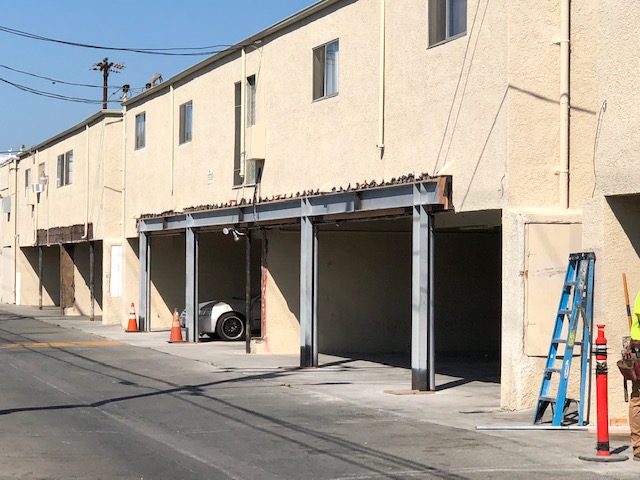
Depending on the existing structural system, steel H-frames or other reinforcement may be added around an opening to provide additional support.
How Is the Right Structural Repair Determined?
Visible damage tells only part of the story. Structural engineering helps determine how much of your building is affected, what loads the component supports, and whether it can be repaired or should be replaced.
An evaluation may consider:
- Whether the condition is localized or more widespread
- Whether deterioration is continuing
- Loads carried by the affected component
- Previous alterations to the building
- Temporary shoring or stabilization requirements
- Repair versus replacement
A structural engineer typically develops the required repair design. An experienced structural repair contractor can then help evaluate constructability, access, sequencing, budget, and how to execute the repair within the existing building.
Why Older Buildings Need Extra Care
Older properties often contain surprises. Original drawings may be incomplete, previous alterations are often undocumented, and concealed deterioration may not become apparent until work begins. Coordination between the contractor and structural engineer is important when those field conditions differ from what was anticipated.
Age can also affect the scope of work in other ways. Many pre-1997 tilt-up and cast-in-place concrete buildings lack modern seismic detailing. Under existing building codes, more extensive damage may trigger additional structural evaluation or upgrades.
For example, one threshold for substantial structural damage involves gravity-load-carrying components serving more than 30% of the building’s total floor and roof area, along with other structural capacity criteria. Local requirements vary, so evaluate the applicable code provisions for the specific project. Understanding these possibilities early can help you avoid budget surprises.
Timing matters as well. Addressing known deterioration during a planned renovation or building restoration project lets you coordinate the work with longer-term commercial property maintenance and capital planning, rather than treating each condition as a separate project. Documented structural conditions may also come up during insurance underwriting and lender review.
What to Expect During a Structural Repair Project
While every project is different, here’s what you can generally expect:
- Evaluating the condition. Determine what is damaged and why.
- Developing the repair approach. The structural engineer develops the appropriate repair, with contractor input on constructability, access, and sequencing.
- Establishing the scope and budget. Define the work and identify assumptions that could affect cost.
- Planning access, shoring, and sequencing. Coordinate the repair with tenants, operations, staging, and safety requirements.
- Completing the repair. Perform the work according to the engineered design.
Can Structural Repairs Be Completed While a Building Is Occupied?
Most structural repairs can be completed while the building remains occupied. The approach depends on the type and location of the repair, safety requirements, access, and how your building operates day to day.
Depending on your building, planning strategies may include:
- Phasing work by area
- Scheduling work around tenants and operations
- Maintaining access to entrances, loading areas, and parking
- Relocating inventory or equipment where needed
- Scheduling disruptive work during off-hours
- Establishing protection zones around work areas
- Coordinating planned shutdowns in advance
Some repairs, however, may require temporary access restrictions, shoring, or localized closures.
Choosing a Commercial Structural Repair Contractor
Structural repair in an existing building presents different challenges from new construction, which is why it helps to work with specialized structural repair contractors. Contractors need to work with existing conditions, engineered repair details, limited access, and sometimes active business operations.
When comparing commercial structural repair services, consider:
- Experience with similar commercial or industrial buildings
- Experience with the specific type of repair required
- Concrete, steel, and wood-framing capabilities
- Ability to work from structural engineering plans
- Experience in occupied or operational buildings
- Planning for access, phasing, staging, and safety
- Communication throughout the project
Price is important, but when you compare proposals, also look at differences in scope, assumptions, exclusions, and access requirements.
Planning Structural Repairs for an Aging Commercial Building
Finding structural damage can be unsettling, especially before you know the cause or the cost. The good news is that getting the right people involved early can make the path forward much clearer.
Saunders Seismic has spent more than 45 years helping commercial, industrial, and multifamily property owners with structural repairs and seismic retrofits across California, Washington, Oregon, Nevada, and Utah. We know your building needs to keep running, so we plan the work around your tenants and operations whenever possible.
If you’ve spotted structural damage or would like a preliminary project budget, reach out to Saunders Seismic. We’re glad to talk through your building and next steps.