
Accurate Seismic Retrofit Budgeting for Industrial & Commercial Buildings

Preparing a budget for a seismic retrofit project is a critical step in managing costs and expectations. However, creating an accurate seismic retrofit budget requires clear information, early coordination, and a detailed understanding of your building.
Ultimately, a precise budget helps you plan, secure financing, and avoid surprises once design work begins. The more information you provide upfront, the closer your estimate will reflect the final construction cost.
This guide explains the information needed for a retrofit budget, the retrofit cost variables that affect pricing, and the documents required to prepare a precise seismic retrofit cost estimate for your building.
Read: Does Your Building Need a Seismic Retrofit?
What We Need to Prepare an Accurate Seismic Retrofit Budget
Reliable budgeting starts with accurate, complete information. The items below help us develop a realistic cost range for planning, acquisitions, or loan approvals.
You can submit all required information through our Budget Preparation Form.
Contact Information
Clear contact details ensure we can reach you with questions and deliver your completed budget.
Please provide:
- Budget requested by (date)
- Full name
- Title
- Company name
- Email address
- Phone number
- Mailing address
General Property Information
At a minimum, basic building details help define the scope and complexity of the project.
Please provide:
- Property address
- Square feet broken down by roof area, warehouse, office, mezzanines
- How many stories?
- Total square feet per floor
- Building height
Job Type
Identifying the job type ensures that the budget reflects the correct scope of work.
Please select all that apply:
Building Reports and Documentation
Existing documents reduce unknowns and help us understand the building’s condition and potential detailing. (See samples in the Information Samples section below.)
Please provide any of the following you already have:
- Leasing plan showing office area dimensions
- Property assessment report (seismic if possible)
- Engineer report or due diligence report
- Engineer concept, if available
- Existing structural plans (S-Pages)
These documents help define the scope we use to establish your project estimate.
Pictures of the Building
Photos offer valuable insight into access, structural conditions, and interior layouts—especially when site visits aren’t yet scheduled.
Please include photos of:
- Exterior
- Rooftop
- Underside of roof structure
- Office areas
- Tenant operations
Budget Intent: What the Numbers Are Being Used For
Understanding the purpose of your budget helps us tailor the level of detail and the pricing range.
Purpose of the Budget
Tell us whether you need:
- Preliminary pricing
- Acquisition budget
- Loan-related conservative pricing
- Conceptual planning
- “As close as possible” estimates
Note: All budgets include a low, medium, and high cost range. This range accounts for variables that may change once engineering is complete, including detailing adjustments and scope refinements.
Each purpose carries different expectations for accuracy and cost sensitivity.
Pricing Transparency and Why It Matters
Not all budgets are created equal. In construction, the lowest bid rarely delivers the lowest final cost. Low-price contractors often start with incomplete scopes and optimistic allowances—costs that later show up as change orders once work begins.
Our approach is different. We price projects accurately from day one with a clear scope, realistic assumptions, and transparent cost ranges. This upfront clarity protects your budget, reduces risk, and eliminates surprises. In fact, in most cases, the proposal that appears slightly higher at the start ends up being the most cost-effective at project closeout.
Cheap bids create expensive change orders.
Accurate bids create predictable outcomes.
Timeline and Review Expectations
Project timing can influence pricing due to changes in the material and labor markets.
Please share:
- When you need the budget
- When you expect construction to begin
- Whether you have city-approved plans
More time and clearer documents allow us to prepare a more refined estimate.
Information Samples
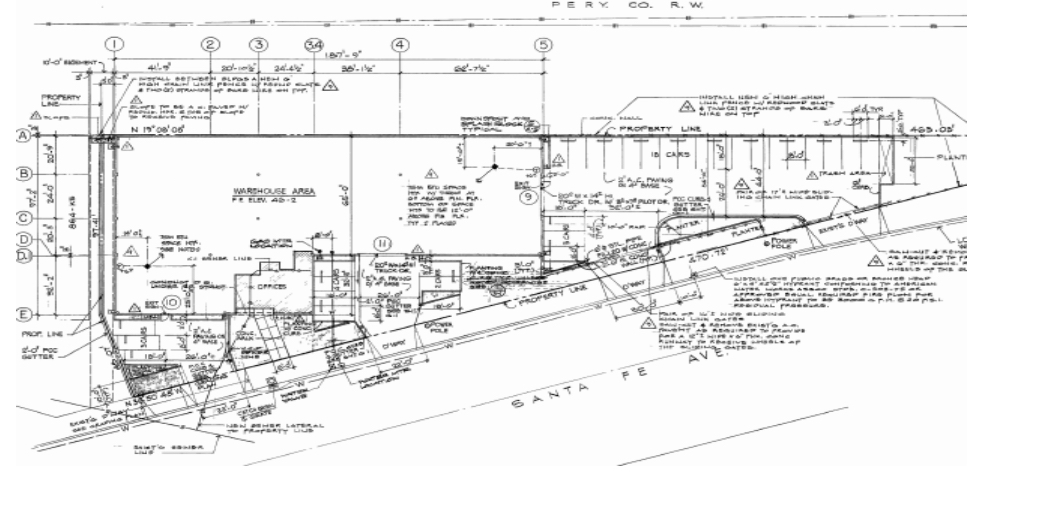
Typical Concrete Tilt-up Seismic Retrofit
Sample 1: Tenant plan with office space and warehouse rack plan (preferred)

Sample 2: Not preferable but acceptable
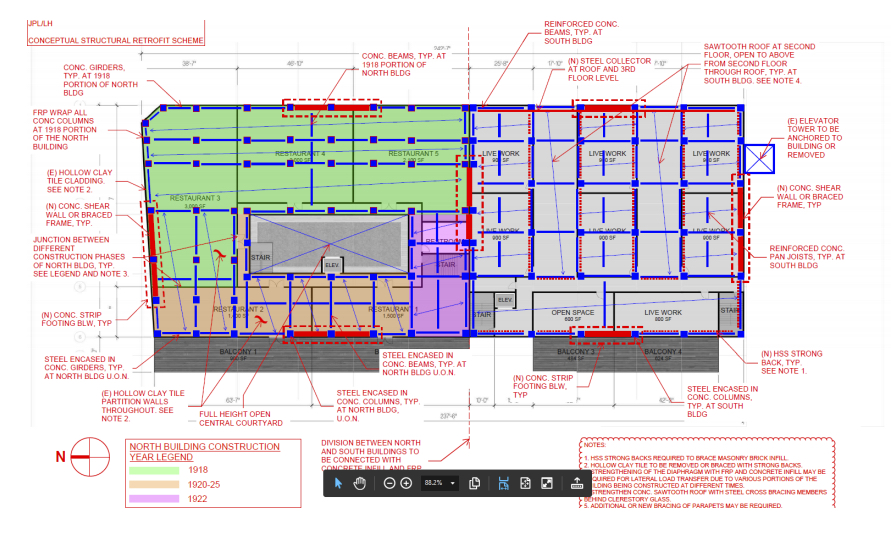
Non-Ductile Concrete
Usually supplied with a report and some modeling by the engineer
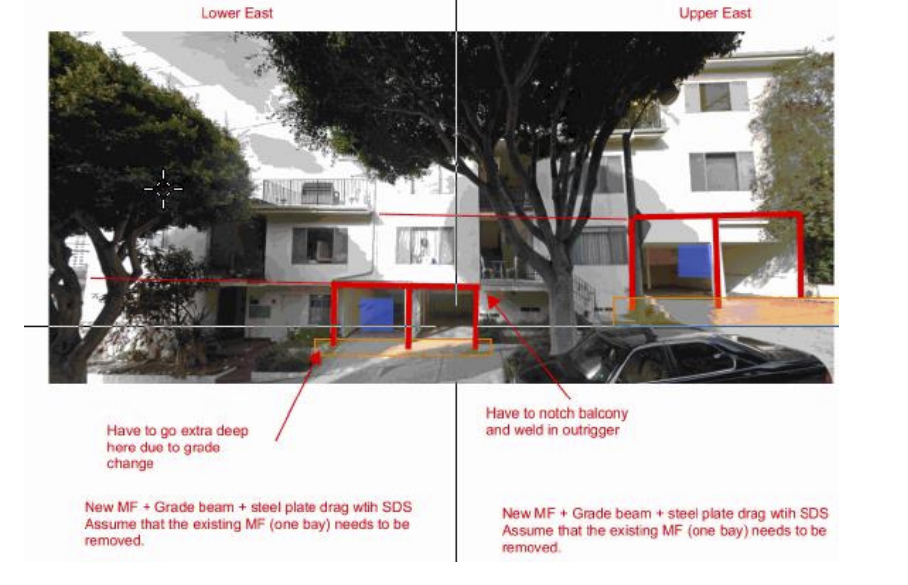
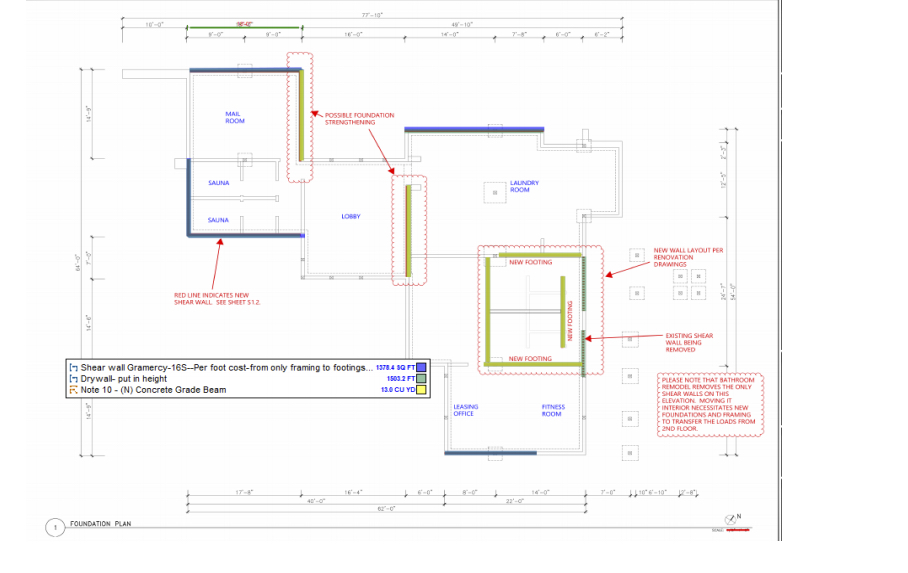
Apartment Projects
Usually supplied with a report and some modeling by the engineer
The Saunders Approach to Budget Accuracy
Submitting complete information helps us create a budget that aligns closely with the final approved plans. Our goal is to make budgeting straightforward and reliable so you can plan next steps with confidence.
We only ask that after providing a detailed budget, we are given the opportunity to bid on the project once plans are approved.
Get a Detailed and Accurate Seismic Retrofit Budget
By starting early, budgeting gives you a clear view of project scope, likely detailing, and potential cost ranges before entering full design. With a well-developed estimate in hand, you can move into engineering, permitting, and tenant planning with confidence.
Saunders Seismic delivers accurate, acquisition-ready budgets for industrial and commercial buildings across the Western U.S. Our team combines decades of field experience with a structured budgeting process to help you make confident decisions at every step.
Contact Saunders Seismic today to get started.