











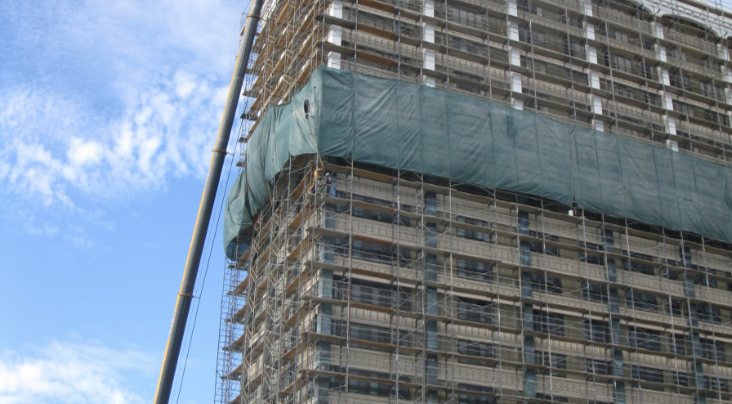

Non-ductile concrete retrofit ordinances are prompting owners of older buildings to evaluate seismic vulnerabilities and prepare for potential structural upgrades. Several California cities have mandatory programs that set deadlines for engineering evaluations, retrofit plans, and construction. Other western jurisdictions may have existing-building seismic requirements that apply under certain circumstances.
For commercial property owners and managers in California, Nevada, Utah, Oregon, and Washington, understanding applicable requirements can help with retrofit planning, budgeting, and compliance.
What Is a Non-Ductile Concrete Retrofit Ordinance?
A non-ductile concrete retrofit ordinance sets requirements to evaluate and, when necessary, strengthen certain older reinforced concrete buildings. These structures may lack the seismic reinforcement and detailing found in newer construction, making them more vulnerable during strong earthquakes.
Not every older concrete building is subject to a retrofit ordinance. Requirements depend on the jurisdiction, building characteristics, construction history, and other criteria.
For more information about these structural vulnerabilities, read our article, Non-Ductile Buildings: Why They Pose Serious Earthquake Risk.
Where Are Non-Ductile Concrete Retrofit Ordinances in Effect?
Several California jurisdictions have established mandatory seismic retrofit programs for non-ductile concrete buildings. Requirements and compliance schedules vary, so owners should confirm their property’s status with the applicable building department.
Important note: Compliance deadlines start when each property owner receives an official notice from the city, not on the ordinance’s effective date.
Los Angeles, California
Los Angeles established its mandatory Non-Ductile Concrete Retrofit Program through Ordinance No. 183893, which took effect on November 22, 2015. The city began issuing Orders to Comply for identified non-ductile concrete buildings on December 1, 2017.
The ordinance generally applies to qualifying concrete buildings submitted for plan check before January 13, 1977.
- Within 3 years: Submit the required building checklist and supporting documentation.
- Within 10 years: Submit documentation demonstrating compliance, proof of a qualifying previous retrofit, proposed retrofit plans, or demolition plans.
- Within 25 years: Complete the required retrofit or demolition work and obtain the applicable compliance documentation.
Although the final construction deadline may appear distant, engineering evaluations, design, permitting, and construction can require substantial preparation.
Owners should review their individual notices to determine which deadlines apply.
Santa Monica, California
Santa Monica established its mandatory seismic retrofit requirements for non-ductile concrete buildings through Ordinance No. 2537CCS, adopted March 28, 2017. The city subsequently amended these requirements in October 2025.
The program applies to qualifying concrete buildings constructed under building code standards enacted before January 11, 1977. Current requirements and compliance schedules are detailed in Chapter 8.80 of the Santa Monica Municipal Code.
Under the standard compliance schedule, owners generally must:
- Within 3 years: Submit a structural evaluation report.
- Within 4 years and 6 months: Apply for a building permit and submit plans.
- Within 10 years: Obtain final approval.
Certain properties meeting specific permit-related conditions qualify for extended compliance periods, including up to 12 years for final approval.
Owners should confirm whether their property falls under the standard or extended schedule.
West Hollywood, California
West Hollywood established mandatory seismic strengthening requirements for certain non-ductile concrete buildings through Ordinance No. 17-1011, which became effective August 7, 2018.
The city’s Seismic Retrofit Program uses a phased approach, with requirements addressing both major structural deficiencies and comprehensive strengthening.
Under the ordinance’s standard schedule, key milestones include:
- Within 3 years: Submit an engineering report identifying structural deficiencies.
- Within 10 years: Complete required mitigation of major deficiencies, when applicable.
- Within 20 years: Complete the full retrofit.
Additional milestones govern engineering plans, permits, and construction.
The city has extended certain compliance deadlines, including adjustments related to the COVID-19 local emergency. Owners should review their individual notices and confirm their current deadlines with the city’s Building and Safety Division.
What About Oregon, Nevada, Utah, and Washington?
Seismic safety requirements vary across the western United States. While California has several established local non-ductile concrete retrofit programs, other states generally approach existing-building seismic requirements differently.
Oregon
Portland’s seismic design standards for existing buildings address certain structural alterations, occupancy changes, and other qualifying projects.
In 2025, Portland amended its existing-building seismic regulations. Under the revised provisions, certain alterations requiring building permits will trigger an ASCE 41 seismic evaluation beginning January 1, 2029, subject to specified thresholds and exemptions.
These requirements are not equivalent to a blanket ordinance requiring all older non-ductile concrete buildings to undergo seismic retrofitting. Owners planning substantial building modifications should determine whether seismic evaluation or strengthening requirements may apply.
Nevada, Utah, and Washington
Seismic requirements in Nevada, Utah, and Washington depend on applicable building codes and local jurisdictional requirements. Owners of older concrete buildings should confirm whether local regulations or proposed alterations, changes in occupancy, or other project conditions trigger structural evaluation or strengthening requirements.
Because seismic requirements vary by jurisdiction and can change, owners should always confirm current requirements with the applicable local building department.
What Happens When a Building Owner Receives a Retrofit Notice?
Receiving an official notice does not necessarily mean construction must begin immediately. However, it may establish deadlines for several steps that must occur before the retrofit is complete.
Review the Notice and Applicable Deadlines
Determine which ordinance applies, what documentation is required, and when each compliance milestone must be completed.
Engage a Qualified Structural Engineer
A structural engineer can evaluate the existing building, identify seismic deficiencies, and develop the appropriate strengthening design.
Evaluate Construction Requirements
Once the engineering scope becomes clearer, an experienced seismic retrofit contractor can help assess construction methods, site access, scheduling, and preliminary costs.
Plan Around Building Operations
For occupied properties, the construction approach may need to accommodate tenants, residents, employees, or ongoing business activities.
Allow Time for Unexpected Conditions
Older buildings may contain structural details that differ from original construction drawings. During construction, previously concealed conditions may require engineering revisions, additional repairs, or schedule adjustments.
Age-related issues involving plumbing and waste lines, gas lines, electrical systems, and other building components may also become apparent once work begins. Because owners often undertake seismic retrofits alongside broader renovations, they should coordinate these projects to minimize disruption and avoid duplicating work.
What Does a Non-Ductile Concrete Retrofit Involve?
A non-ductile concrete retrofit strengthens vulnerable structural components to improve the building’s ability to resist earthquake forces.
Depending on the engineered design, improvements may include new shotcrete walls, new concrete shear walls, strengthened columns and connections, carbon fiber-reinforced polymer (CFRP) systems, foundation upgrades, and new structural collectors.
The construction approach depends on the building’s structural configuration, existing conditions, occupancy, and the deficiencies the engineer identifies.
Can a Non-Ductile Concrete Retrofit Be Completed While a Building Remains Occupied?
In most cases, yes. Whether occupants can remain in a building depends on the engineered scope, construction methods, safety requirements, and building configuration.
Major concrete retrofits can involve extensive drilling, installing reinforcing steel, applying shotcrete, excavating foundations, and working in occupied areas.
Careful planning may allow portions of the work to proceed while the building remains operational. Other activities may require temporary relocations or restricted access.
Saunders Seismic has completed complex non-ductile concrete retrofits involving occupied high-rises and other buildings with significant operational constraints.
Occupied 18-Story Senior Housing Tower
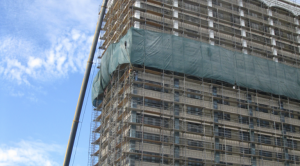
Saunders strengthened an occupied Costa Mesa senior housing tower with new exterior shear walls, foundation improvements, and approximately 53,000 square feet of CFRP reinforcement. The building remained occupied throughout construction, with residents temporarily relocated from affected floors during interior work.
View the case study: Strengthening an Occupied 18-Story Senior Housing Tower
Occupied Residential High-Rise
For a residential high-rise in Los Angeles, Saunders installed new shotcrete shear walls and reinforced boundary elements across multiple elevations.
View the case study: Phasing a High-Rise Seismic Retrofit Around Resident Relocations
Multi-Story Institutional Building
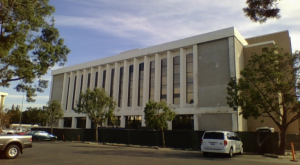
A concrete institutional building in Fullerton required new shear walls, CFRP strengthening, foundation improvements, and 48 micropiles.
View the case study: Adapting a Seismic Retrofit to Unexpected Existing Conditions
Why Early Retrofit Planning Matters
Even when an ordinance provides several years for compliance, engineering evaluations, structural design, permitting, budgeting, and construction all require time.
Starting early gives owners more flexibility to evaluate options, plan around building operations, prepare for unexpected conditions, and complete required work before compliance deadlines.
Questions About a Non-Ductile Concrete Retrofit?
Whether you’ve received an official retrofit notice, are working with a structural engineer, or are simply trying to understand what your building may require, you don’t need to have all the answers before reaching out.
Getting Saunders Seismic involved early can make a significant difference. By collaborating with structural engineers and property managers during the design process, we can help identify alternative construction approaches that may reduce costs, simplify installation, and minimize disruption to tenants and building operations. Our experience has helped owners achieve substantial construction savings while meeting the engineered retrofit requirements.
Contact us at any stage of the process. We’re happy to discuss your building, explore potential options, and help you determine the next steps.